Vita Muir, Litchfield Performing Arts
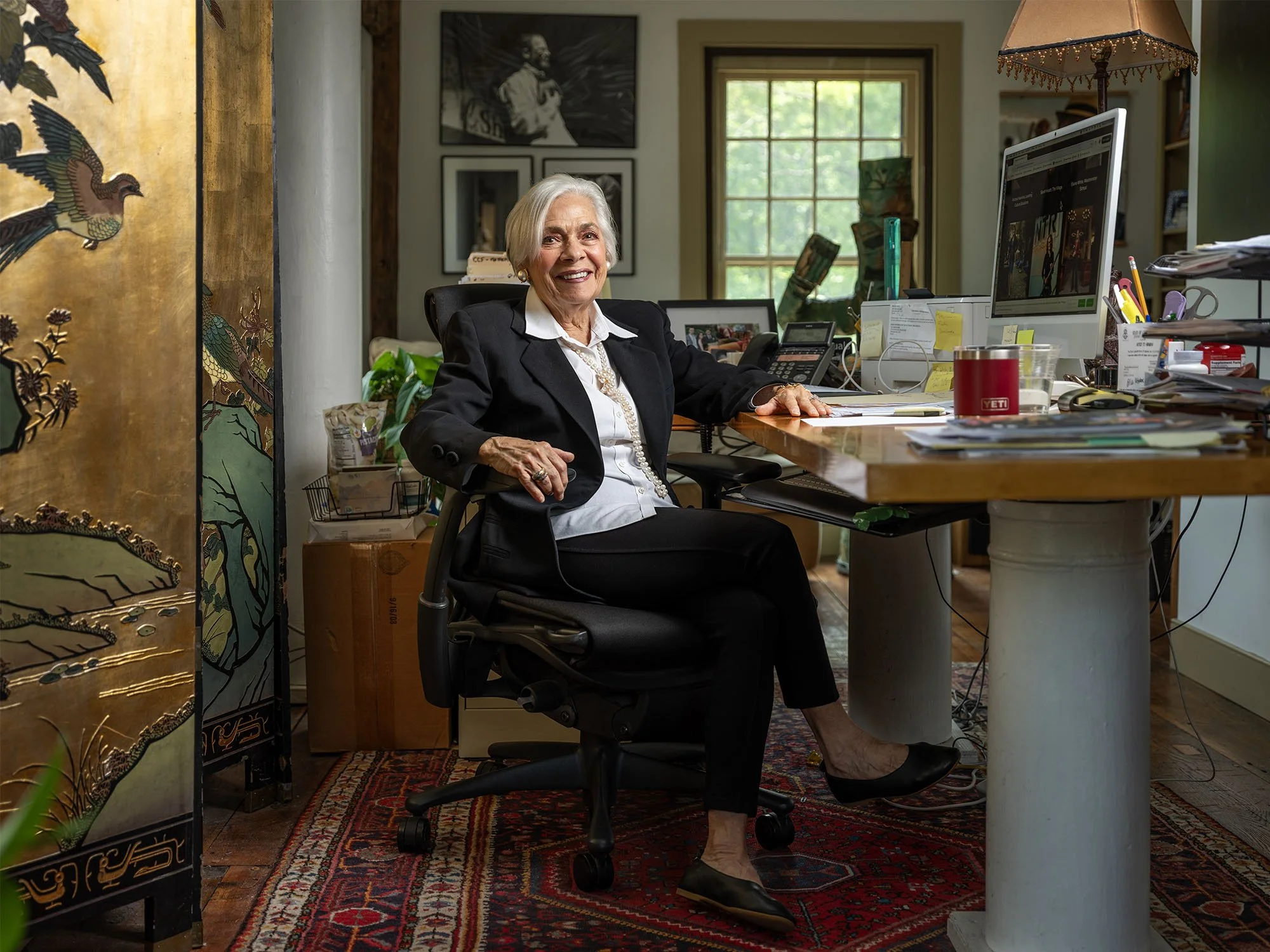
Meet Vita Muir, Executive Director and Founder of Litchfield Performing Arts, Inc., an organization with a vision and values rooted in music, community, education, and transformation. For nearly three decades, Vita has carried that vision forward through the Litchfield Jazz Festival and Litchfield Jazz Camp, shaping them into spaces where artistry and education meet, and where lives are changed through the power of music.
Since its founding in 1996, the festival has welcomed world-class performers while the camp has nurtured the next generation of musicians, offering them not only technical training but also the confidence to improvise, collaborate, and find their own voice. What began as a bold idea has grown into a not-for-profit dedicated to changing lives through the arts.
The year 2026 marks the 30th anniversary of Litchfield Jazz Camp and the 45th year of Performing Arts, whose first concert was held in my North Street, Litchfield living Room on January 31, 1981. Fifty-one people attended. And the rest is history. It’s a heartwarming tale of changing the world, or our part of it at least, for the best through music.
Under her leadership and care, the festival has become a beloved tradition in Connecticut and beyond, while the camp has offered students a space to explore, experiment, and find a sense of belonging through music. Vita’s leadership reflects both poise and purpose: the poise to navigate the complexities of organizing a premier cultural event, and the purpose to ensure that jazz remains a living, breathing force for connection and growth.
It is this balance of vision and impact that makes Vita Muir a fitting choice for our newest Poise and Purpose spotlight. Here’s what she had to share when we sat down together.
For those meeting you for the first time, tell us who’s impacted by the work that you do, and what is your personal connection to this work?
My work has always been about creating places where jazz can thrive, whether on the festival stage or a camp classroom. The festival brings world-class artists to audiences who love and understand the music, while the camp opens doors for students of all ages and backgrounds to learn, grow, and find community. Together, they reflect the heart and soul of what we do, which is sustaining jazz as an art form and a way of connecting people.
The camp, in particular, has been at the heart of what we do for decades. I wasn’t willing to watch it fade, so I made changes to protect it by moving the festival indoors to the same site where we hold the camp. Outdoors was a wonderful experience, but the infrastructure alone cost $100,000, and you were always at the mercy of the weather. Indoors, we could sustain it, and we began attracting audiences who knew and loved jazz; people who understood what they were hearing and wanted to be part of it.
Today, the camp runs for a month and welcomes hundreds of students each summer from teenagers to adults from all over the world. Last year alone, we counted more than 300 student weeks. From the very beginning, I set it up so that anyone could come. No pre-auditions, no barriers. If you know your notes, play your instrument, and want to learn, you’re welcome. And if you don’t have the money, we’ll help. In 30 years, we’ve never turned down a student. Each summer, we raise between $70,000 and $100,000 in need-based support to make sure of that.
Students arrive, take a placement audition, and are put into small combos based on their skill level. It works like a charm. They learn, they grow, and they find community. What we do impacts not just the kids, but the families, the audiences, and the broader jazz community.
And my personal connection? It’s simple. I couldn’t let something this worthwhile disappear. It’s been my life’s work to make sure the camp and festival continue to thrive, because they change lives. So many live for the better through the music.
While rewarding, purpose-driven work can also require significant energy. Do you have a self-care routine that helps you maintain balance?
The children keep me going. I sometimes think of them as little batteries. They give me energy, and I draw strength from them. They stay in touch, and I have the opportunity to help them find the right college, or work, or a great mentor. It’s the work itself that feeds me. I don’t meditate or follow a formal routine; my balance comes from being immersed in this purpose.
I’m 82 and a half now, and in excellent health. I don’t suffer from the things many people my age, or even younger, often face. And I believe that’s because of what I do, and who I do it for. When we dedicate ourselves to something larger than us, we receive so much more than we give. You can’t really explain it; you have to feel it, to experience it. That’s what sustains me.
Where have you drawn inspiration from throughout this journey?
From everybody, and from everything. For me, every moment is an opportunity and a lesson, especially at camp. I don’t just set it up and walk away. I’m there all the time, in the classrooms, learning alongside the kids and making sure the quality of what we’re doing is top-notch. It’s amazing to witness.
At this year’s Jazz Camp, I tried something new. I asked our teachers, especially those who have been with us the longest and hold a special place in our story, to update their bios and then write a few paragraphs about their experience here: what the camp has meant to them, how it shaped their journey, and where they are now. The responses I received were incredible. I plan to share the best of them in our Festival program book and on the website, because they are so inspiring. Reading those reflections, I learned more about the people I respect and how their lives have been supported or even transformed by something I helped put in motion. That inspires me deeply. It reminds me that everything is a learning experience, and it keeps me going, like a battery that never runs down.
Has there been a particular challenge in your own life, where looking back now, you realize it was a pivotal moment in your own growth journey?
Not really in the sense of one defining moment - everything I do serves as a lesson, whether I succeed or fail. There was a time when I didn’t receive a grant I had counted on. For several years, we had been funded consistently, even supported through the production of a film that featured our work. When I resubmitted the grant, I was certain it would be renewed, and then it wasn’t. I was blindsided. I cried, and it was the first and last time I ever cried over something like that.
At that moment, I decided I would never let a setback like that stop me again. I taught myself (and everyone who works with me) that you win some, you lose some. It doesn’t always have to be about you or what you did or didn’t do. It’s simply how things go. You try, you give your best, and if you lose, you move on. That lesson has saved us time, emotional energy, and frustration. It’s probably the best lesson I ever learned - and I taught it to myself.
Lastly, what advice would you offer the woman with a whisper in her heart to lean deeper into her power?
I was frightened, truly frightened, for much of my life. I was timid as a child, overprotected by my parents, and it was hard for me to step out and be brave. So, I developed compensatory tricks to manage my nervousness. One of my earliest lessons came from a brilliant teacher who asked me to read my paper aloud in class. When my hands shook, she told me, “If there isn’t a lectern available, pick up a heavy book and steady yourself.” That simple advice gave me a way to begin building strategies to cope.
Later, in job interviews or public settings, I found ways to mask my nerves -- sitting on my hands so no one could see them shake, leaning forward to redirect attention. For years, I asked my husband, who was an extrovert, to do the announcing at our events because I was too anxious. But eventually, I had to step into the role myself. I remember giving a talk where, a few minutes in, I realized: this isn’t about me. It’s about the message I want to share. That shift changed everything. Now, I keep a small piece of paper with bullet points when I speak, so I don’t get lost, and I let myself talk extemporaneously.
The truth is, I’ve always been afraid, and to some extent I still am. But I’ve learned to live with it, to make it work for me, and to keep going despite the fear. My advice is this: be brave anyway. Find your passion, find what moves you, and organize yourself so you can pursue it with intention. Don’t wander aimlessly. Make plans, prepare, and commit. And most importantly, let your work be in service to others. If what you truly want serves others, that will carry you forward, even through fear.