Teri Schrader, Watkinson School
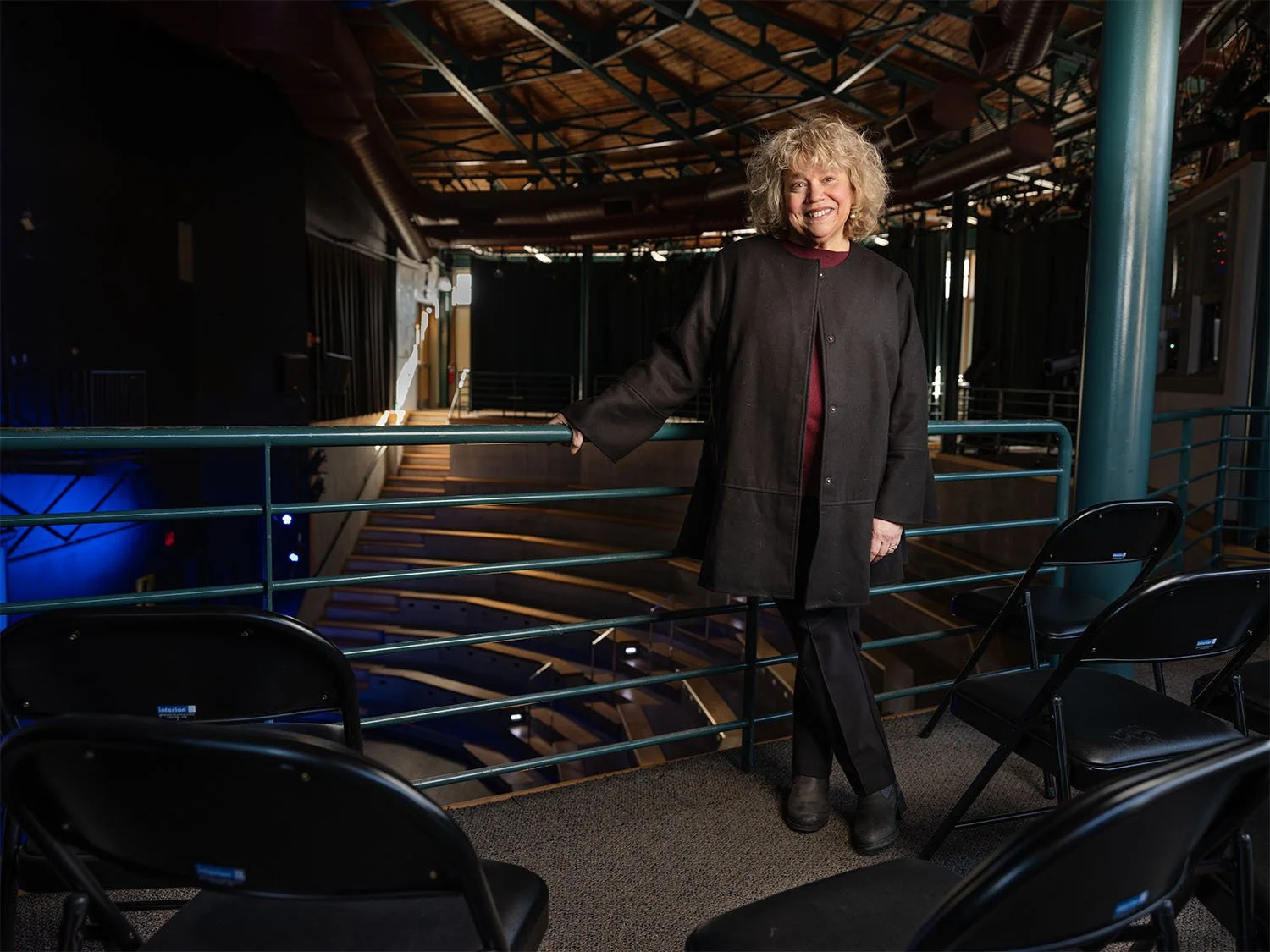
Meet Teri Schrader. While her official title is the Head of School at Watkinson School, in Hartford, Connecticut, she is also an artist, reimagining how we educate and nurture our youth, innovating ways to color their days with curiosity and cultivate their sense of belonging and community. Under her leadership, Watkinson has implemented culturally responsive curricula and created a safe, inclusive environment for students of all backgrounds. The school prioritizes critical thinking, creativity, and community engagement, placing students at the center of their learning experience and empowering them to become curious, capable, and resilient individuals.
Teri is dedicated to empowering teachers to make meaningful decisions about their students' education, moving away from standardized approaches. This philosophy has distinguished Watkinson as a school that values relationships, individuality, and rigorous, purposeful learning experiences.
Celebrated for her educational contributions, particularly in fostering equity and innovation, Teri has also been involved in numerous educational initiatives. Beyond her role at Watkinson, she has been a facilitator for the School Reform Initiative and a board member for Hartford Youth Scholars. Additionally, she has contributed to teacher preparation programs, collaborative leadership initiatives, and efforts to address systemic injustice and promote anti-racist school leadership.
What an incredible honor to spend time with this remarkable woman!
Teri, who is impacted by the work that you do?
“I don't think anybody really knows the full extent of who is impacted by their work. I hope to have an impact on my students and colleagues; we come to this place with purpose, and everybody affects each other. It's a school community, and we all believe that the reason we don't just stay home by ourselves is so that we can be together and learn from each other. I think that any time there's learning, there's an impact. We're not always sure what it will be going forward, but I believe that any time people come together to learn, there is an impact of some sort.”
Do you have a personal connection to this work?
“I was not an intentional educator. I was working in professional theater when I learned of an opportunity to direct a play at this school in 1982 during the afternoon activity period. The line producer at Hartford Stage Company gave me the contact information and said, 'This school wants someone to direct a play for kids, and you should do it because they'll probably pay you.'
When I met the students, I felt 'This is incredible. These people are amazing!' I had been planning a career in theater with adults, but I realized that everything that drew me to theater existed here—but in a completely different way, even more fully expounded because the kids were extraordinary, fun, and smart. I couldn't wait to come every day.
So my entry into education was really around directing theater. The school increasingly asked me to stay longer, teach during academic hours, and eventually I became director of the arts program. I expanded my artistic practice to incorporate a teaching world. It was stepping into an unknown and finding something I didn't even realize existed or that I might have been looking for.”
We talked about that internal knowing when you find yourself in alignment and how it allows us to lean into the unknown.
“There was no denying. At 20 or 21, I was piecing together income from 5 or 6 different places. I realized pursuing life as an artistic director in regional theater meant changing jobs every six weeks. Being already married and home-centered, this lifestyle didn't appeal to me. I had this convergence of big life realizations, which is … I love directing plays. I love trying to understand what a playwright is getting at with this piece of work. I love translating that thought into action with actors. Then there was the uncertainty of making money. A 95% unemployment rate in the field is scary. Then coming here, I met students like Molly Glynn. The first day I saw her I knew I was in a place where I wanted to be more. Ken Schmoll, who sits at the assistant desk, he was my student here, a really talented actor, and somebody who graduated from the Creative Arts Program and went and had a life as a professional theater director in NYC. These talented young people were serious about the arts. As my role expanded, I taught kids who might not become professional actors but were curious enough to dig into the intellectual aspects of theater. I realized teaching is so cool! Nobody could tell me I wasn't sitting with a group of actors when I worked with those kids—because they were!”
While rewarding, purpose driven work can also require significant energy from us. Do you have a self-care routine that helps you maintain balance?
“I am very disciplined around things important to me. I run every morning without fail before school and generally again after school. I call it my bonus workout. It's energizing and private—very rarely are there phone calls during running. I don't do it with anybody else. It's something I set aside for myself, especially once I come here, for both physical health and quiet, uninterrupted time.
I don't meditate in the traditional sense—I can't sit still long enough—but I do some version where I'm in conversation with myself and the larger world around me, whether physical, spiritual, or emotional. I tend to be very aware, so I pay attention. That keeps me centered."
Through my own interactions with Teri over the years, I shared this observation: "I really respect how you show up in your interactions. You always seem very centered, taking everything in, being observant and present with everyone, then intentional about how you respond—acknowledging perspectives and reciprocating value. It's an art I don't always witness.”
She smiles, "That means a lot to me. Those ways of being are central to how I'm put together. When I was a kid, I was very attentive to my teachers. In high school, I had artistic experiences with professionals that taught me ... some of this is who I am naturally, but part of it is being trained young in the arts. Good acting doesn't come from pretending but from knowing how to pull everything in, then come to neutral. When I'm listening, I'm really listening. Everybody has something to say—there's no automatic cutoff that says this is important versus less important. You've got to be where you are."
We acknowledged the ripple effect when we show up centered and present.
“I feel there's a lot we have to think about in terms of how we want to be with each other. We're in a particularly risky spot with humanity and interactions. Being an educator and a person in a leadership role, the ability to tend to people needs to be exercised carefully—respecting students, respecting teachers' voices, trusting them to do their best work so students trust their teachers and everyone knows 'we've got you.' It doesn't always have to be easy, but we've got you. We know who you are. You're safe and we're going to push you to do great things. I worry about the tone of decency in our country, so being centered, respectful, and attentive feels really important.”
We discussed the immense responsibility that comes with leadership.
"The more you dive into leadership, the more you realize it gets harder because you become more cognizant of the responsibility. Thinking about this school, figuring out what I need to be aware of to hold the school safe during all this crazy stuff out there is an added layer that drives home feeling responsible."
I acknowledged the weight of that responsibility: "It takes incredible strength, self awareness, and a genuine love of humanity to be a leader. Our leaders need safe spaces to feel held too, because we're still human with moments of fear and doubt. How do we honor that and still serve in the capacity needed from us?"
"Leaders need people around them. No leader is that by themselves. I feel very lucky to work with people who are smart, funny, inventive, persistent, and rugged but also sensitive."
We talked about team communication. "I've noticed how leaders can get so focused on results that they forget to build the foundation for open communication. At Watkinson, everyone seems truly connected—not thinking the same way, but feeling safe enough to share their thoughts. That kind of trust doesn't just happen overnight."
She builds, "It is very powerful! A lot comes from expressing what you truly believe in—the couple of things you'd go to the wall for—then being willing to let everything else go. Do people actually believe we're smarter together, or do they believe they're the smartest one who alone can fix everything? I look for that quality in people to take on big work here. It's easy to give that lip service, but if you don't really believe it, it comes out in your actions. I feel like there's a strong belief here that, oh, we are way better together! During the pandemic, I'd often email my core leadership group saying, 'We need to huddle.' Things were flying at us that no one could fully think through alone. Who's affected? What are the implications? None of us can see all the layers, and in times of crisis, the demand for quick answers grows disproportionately to your inclination to do things really carefully. That was a time I remember living into this moment of 'we are so much smarter together.' It's a cool thing to know that at work you can have fun while also getting things done. And the trust is there. We don't always agree, but the commitment to being at a table and knowing 'this conversation would be different if you weren't here' is a fact of my life at this school."
Alright, moving on to the next question. Has there been a particular challenge in your own life, where looking back now, you realize it was a pivotal moment in your own growth journey?
"There have been a couple. One in particular didn't occur here—I was at Watkinson for 11 years, then left, and came back in 2014. For 14 of those 18 years away, I helped start a school in Massachusetts with Ted Sizer, a renowned educator, creating a public independent Charter School.
Starting a school is really hard work. I came at the end of its first year when it was about to double in size—everything had to scale up, including the faculty. The school had a very flat organizational structure, with everything decided by consensus.I found this exhausting while trying to build. This is when I had a conversation with Ted that shaped my thinking.
His words were, 'Make this school your vision of a school. Make it that, that's why you're here.' I thought, make it my school? What does that mean? My first impulse was, I can't—there are others who were here first, we're just in startup. Then I realized he didn't mean boss everybody around. He meant plant yourself and let yourself be. Put it out there and it'll happen. That was a big moment.
I eventually became head of that school. We developed structures that let people do brilliant work. (I'm a big believer in structure—you can't be a random universe, because people spend all their time trying to figure out where they are.) But it was him in that moment saying, 'Make the school be the school you know it can be. That's why I brought you here. Be who you are.' He knew who I was at Watkinson. They didn't bring me in by accident. He wanted me to remember that I wasn't starting over. I was just starting there. I can't say everything was easy for the next 14 years. It was hard, but it was an incredible experience.
This April the school is turning 30—it survived its startup. I look at that school, which is an essential school. They believe in those 10 common principles, and Watkinson believes in those same principles. That's been the through line in my life as an educator—believing in these principles that guide the work at Watkinson just as they guided our work at Parker. Ted Sizer wrote those principles. We were very close until the day he died—a very central relationship in my life. That experience allowed me to say, 'I can plant myself here and maybe be afraid, but do it anyway.' It enabled me to return to Watkinson a much stronger version of myself because I had been gone for 18yrs, living the work in a way that felt like this is really me; I love the work and have something to offer these kids and their teachers."
You talked earlier about the importance of community and mentorship. I know we spoke about Ted, are there any others whom you’ve drawn inspiration from over the years?
"Oh, lots! I can go back to teachers I had as a very little kid. Sometimes they're memorable because of encouragement, sometimes because they provided a challenge or standard they knew they'd draw out of me.
My mom and dad were my first teachers and influencers, each in very different ways. What they had in common was that we had music in our house from the day I was born—that's been a central part of my life. I sometimes think about things in terms of music, or I'm sensitive to the rhythms of what's going on. I was in a band as a young person. I think a family with music comes together differently than a house without it. My mom liked to dance, and as little kids we'd bring out pots and pans while my dad played the harmonica and my mom danced.
My parents didn't entirely understand me, but in some ways they got me more than anyone else could. They didn't necessarily get that I was probably headed for a life in the arts. Nobody in my family went to college before I did—my brother got an associate's degree in electrical engineering, but I was the first to attend a four-year liberal arts college and say, 'I want a different life.'
The influences they provided were about acceptance, humor, and not relying on money. We were a profoundly close family, but not resourced—we lived week to week, but found joy. They raised us to be good, thoughtful people. I have two brothers, and I think we all say we had a really good childhood. We didn't have money, but we had everything.
I sometimes look back and don't know how they did it. When I was eight, all I wanted for Christmas was a guitar—and I got one. Looking back now, I don't know how they managed it. I don't know how they got my brother that Lost in Space Robot. But they provided joy and treats, and taught us the importance of education, being thoughtful and kind, and not being selfish. I'm grateful to them. I know they struggled, and the more adult I've become, the more I understand and appreciate what their lives were."
What advice would you offer the woman with a whisper in her heart to lean deeper into her power?
"This is what I say to young girls, women, and students: Don't ignore your intuition. It's the only thing that matters sometimes, and it's what most people will want to discredit when things get difficult. If something feels off, don't talk yourself out of that. Reach out to a trusted person. And I'm not just talking about creepy situations or threats—I mean with everything... listen to and be curious about your intuition.
You've had it since you were conceived, and it's been with you your whole life. Some of us have been good at making friends with it from an early age, and some women don't know they have it or it's been taken or discredited. I believe that for women, almost more than anything else, if we listen to ourselves, it's hard to go wrong. If you think you're in danger, you're in danger. If you think you can achieve that, you're going to achieve that. It's an all-purpose, great gift. I don't want people to be saying no to themselves if they know something at the intuitive level."
We talked about the unsettling that occurs when we ignore our intuition.
"... and you can't make that right by covering it over with action. It takes courage sometimes, whether taking a leap because you were afraid or taking a risk that could expose you. But that's where I start. Then also with women, you have to stick together—there are a lot of over-imposed challenges to being a woman. Make good girlfriends!"